Concerts & Assessments
Concerts:
There are four orchestra concerts each year: Fall, Winter, Pre-Assessment, and Spring. Concerts count for a large part of each student’s grade, so students should try not to miss them. The Pre-Assessment Concert is in the spring and is an opportunity for each orchestra to play their Assessment pieces for family, friends, and VBODA judges before District Assessment happens. Judges provide feedback so orchestras can improve before they are graded at the District Assessments. This is a critical concert for all students to attend.
26-27 Middle School Concert Dates:
Fall: Oct 8
Winter: Dec 3
Pre-Assessment: Feb 18
Assessment: March 5/6 (At Katherine Johnson Middle School)
Spring: May 11
26-27 High School Concert Dates:
Fall: Oct 15
VMEA Performance: Nov 21 (Symphony Orchestra Only)
Winter: Dec 1
Midwest Preview Concert: Dec 11 (Symphony Orchestra Only)
Midwest Conference: Dec 15-17 (Chicago, Symphony Orchestra Only)
Pre-Assessment: March 9
Assessment: March 15-17
Spring: May 13
Assessments
In a regular school year, every Lake Braddock orchestra participates in a District Assessment that is facilitated by the Virginia Band and Orchestra Director’s Association.
This consists of preparing music from a pre-approved list of music that is separated by graded levels of difficulty. Orchestras perform for a panel of three judges and are assessed on the accuracy of the performance in multiple categories.
Orchestras then briefly study and perform a brand new piece of music (sight reading) that is two levels easier than the music they performed for the three person panel for an additional judge for a grade.
The grades from the stage performance and sight reading are combined for an overall grade. While this assessment is not a true standardized test, the experience is commonly referred to as the “Music SOL”.
Orchestra Uniforms
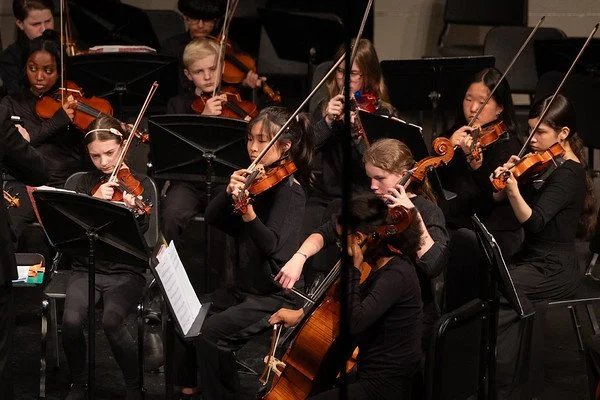
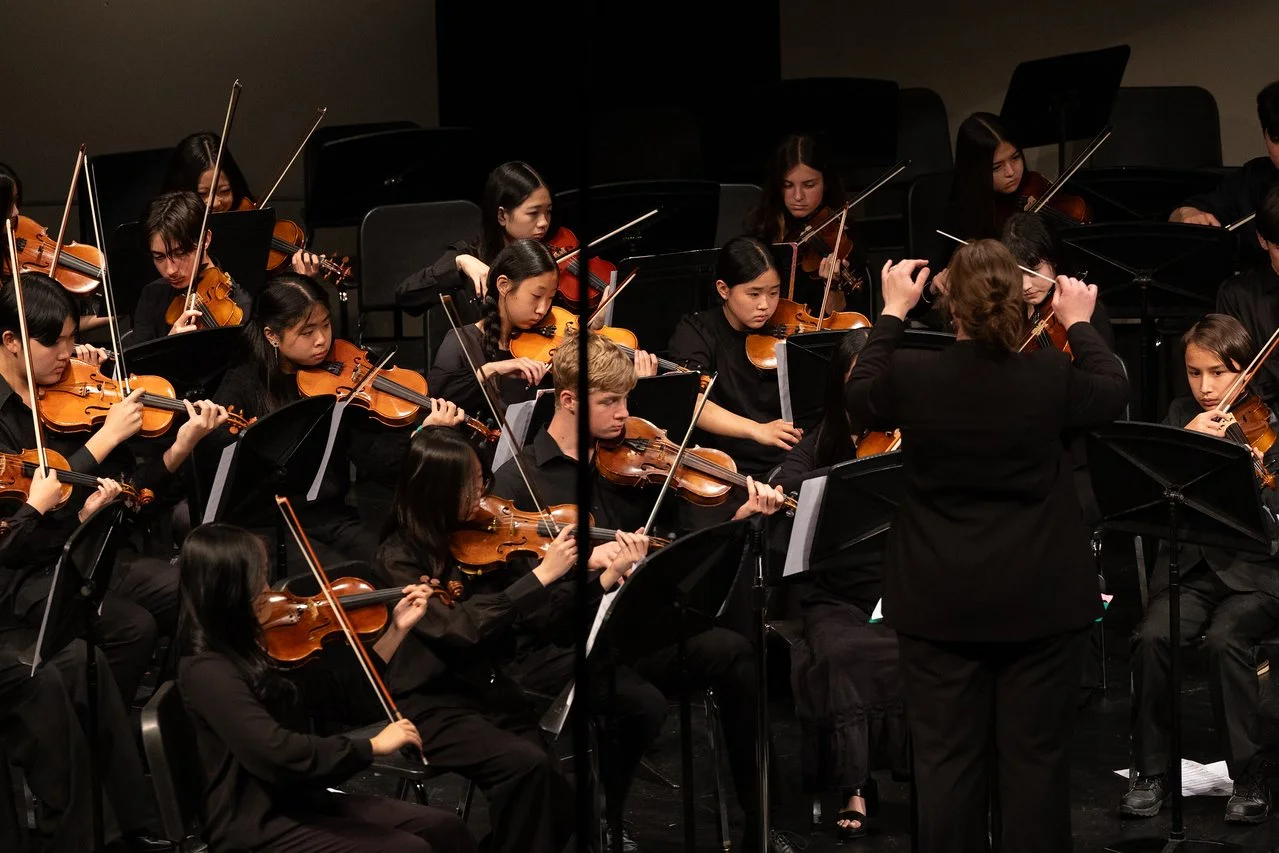
All orchestra members wear a uniform during performances and field trips. For orchestra performances, including assessments, High School and Middle School orchestra members wear Concert Black.
Overview of Concert Black
Concert black, also known as formal black, is a dress code steeped in tradition and elegance. It originated in the 19th century when formal attire was the norm for attending classical music performances. As orchestras and choirs adopted black formal attire in the mid-20th century, concert black became the standard for musicians and audience members alike.
Today, concert black remains a popular choice for concerts, recitals, and other formal events, signifying respect for the performers and the occasion. It creates a unified and sophisticated look that allows the music to take center stage.
Dress Code
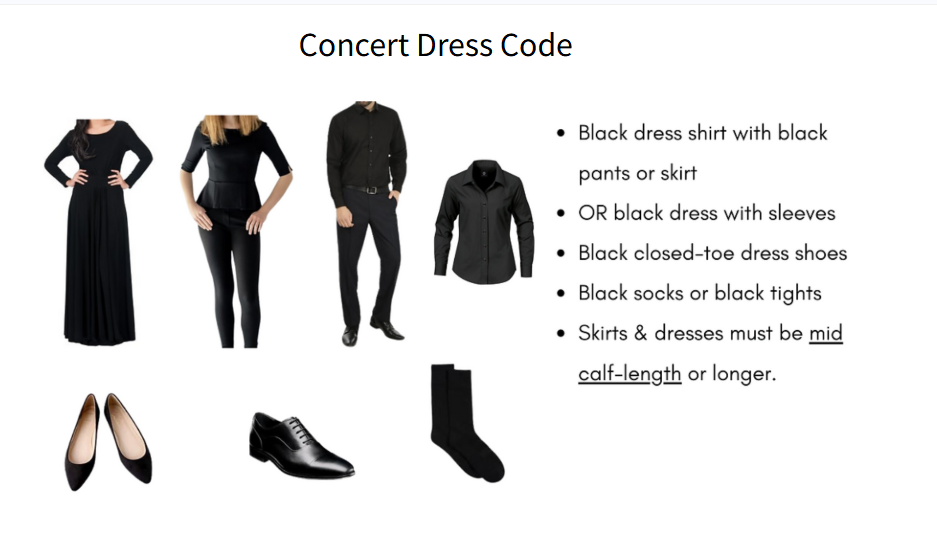
The dress code is quite simple for concert black — you should wear black from head to toe. Tops and dresses should have sleeves. Dresses and skirts should be knee-length or longer, and should be worn with opaque, black hosiery. Pants should be dress pants or slacks — no jeans, leggings, or athletic pants.
Top 3 Problems to Avoid
1. Wearing socks, stockings, or shoes in any color other than black.
2. Wearing black clothing or shoes with a contrasting color pattern or bright or shiny hardware.
3. Wearing short skirts or dresses, cropped pants, or sleeveless tops.
Do’s and Don’ts of Concert Black
Do
Wear black from head to toe: This includes dresses, suits, shirts, pants, skirts, socks or hose, and shoes.
Choose formal fabrics: Opt for fabrics that would typically be used for formal or professional clothing, like wool, silk, satin, or velvet.
Keep it simple and elegant: Avoid excessive embellishments, patterns, or flashy accessories.
Prioritize comfort: Choose clothes that allow you to move and breathe easily when playing your instrument. Cellists and bassists will generally wear longer skirts or dresses, or pants to accommodate their instrument.
Consider the venue and occasion: One of the regular school year concerts or assessment concerts might call for more formal clothing, while a performance on a field trip or in the community might call for an orchestra-branded shirt and a pair of casual, but neat, pants.
Don’t
Wear bright colors or busy patterns: These can be distracting and detract from the performance.
Wear overly casual attire: Jeans, t-shirts, shorts, and sneakers are not appropriate for concert black.
Wear revealing clothing: Keep necklines and hemlines modest to maintain a respectful and professional atmosphere.
Overdo the accessories: A few simple pieces, like a necklace or earrings, can complement your outfit, but avoid excessive jewelry.